Airliner Comparison ToolCompare 60+ passenger aircraft models head to head!

Boeing 767-200ER vs. Embraer E175

vs.
Compare

767-200ER

vs.

E175

Price (USD)
$89 Million$28 Million
First Flight
19842003
Body Type
Wide-bodyNarrow-body
Length
48 m159 ft
31 m103 ft
Wingspan
47 m156 ft
26 m85 ft
Wing Area
283 m²3,049 ft²
72 m²782 ft²
Fuselage Width
5 m16 ft
2 m9 ft
Height
15 m51 ft
9 m32 ft
Max Takeoff Weight
179,200 kg395,068 lbs
40,400 kg89,067 lbs
Number of Engines
22
Engine Options
P&W PW4000, JT8D / General Electric CF6 / Rolls-Royce RB211General Electric GE34
Max Thrust Per Engine
270 kN60,600 lbf
63 kN14,200 lbf
Max Total Thrust
540 kN121,200 lbf
126 kN28,400 lbf
Fuel Capacity
91,380 l24,140 gal
11,625 l3,071 gal
Range
12,200 km6,587 nm
4,074 km2,200 nm
Cruise Speed
850 km/h528 mph
797 km/h495 mph
Typical Seating
216 pax78 pax
Max Seating
290 pax88 pax

What Are the Differences Between the Boeing 767-200ER and Embraer E175

Boeing 767-200ER vs Embraer E175 Size Comparison

  • At 48.50 meters, the Boeing 767-200ER is 16.80 meters longer than the Embraer E175.
  • With a wingspan of 47.60 meters, the Boeing 767-200ER is 21.60 meters wider from wingtip to wingtip.
  • The Boeing 767-200ER and Embraer E175 have heights of 15.80 meters and 9.90 meters respectively - making the Boeing 767-200ER 5.90 meters taller.

Boeing 767-200ER vs Embraer E175 Range

  • Boeing 767-200ER’s range of 12,200 kilometers is greater than Embraer E175’s range of 4,074 kilometers. Therefore, the Boeing 767-200ER can fly nonstop approximately 8,126 kilometers further.
  • The Boeing 767-200ER can hold 24,140 gallons of fuel, which is 21,069 gallons more than the Embraer E175’s tank capacity of 3,071 gallons.

Boeing 767-200ER vs Embraer E175 Seating

  • In a typical seating configuration, the Boeing 767-200ER can accommodate 216 passengers, which is about 138 passengers more than Embraer E175’s seating capacity.
  • The Boeing 767-200ER’s max seating capacity is 290 passengers, compared to 88 passengers of the Embraer E175.

About the Boeing 767-200ER

Introduced in 1984, the Boeing 767-200ER (Extended Range) is a twin engine, wide-body commercial aircraft that represents an advanced variant of the original 767-200. This updated version was designed to offer enhanced range and capacity in the long-haul market. The -200ER spearheaded the growth of Transatlantic twinjet flights under Extended-range Twin-engine Operational Performance Standards (ETOPS) regulations.

The 767-200ER features a length of 48.5 meters (159.2 feet) and a wingspan of 47.6 meters (156.2 feet). With a wing area of 283.3 square meters (3049.4 square feet), the aircraft is engineered to provide a balance of aerodynamic efficiency and structural capability, accommodating long-range flights with a substantial payload. One of the distinctive aspects of the 767-200ER is its extended range capability, with a total fuel capacity of 91,380 liters (24,140 US gallons), facilitating a range of up to 12,200 kilometers (6,587 nautical miles). This extended range makes the aircraft particularly suited for intercontinental routes, allowing airlines to operate non-stop flights over longer distances. The aircraft is powered by a choice of high-thrust engines from manufacturers like Pratt & Whitney, General Electric, and Rolls-Royce. These engines provide a total maximum thrust of 540.0 kN (121,200 lbf), contributing to the 767-200ER's performance in extended-range operations.

In terms of passenger capacity, the 767-200ER typically accommodates around 216 passengers in a dual-class configuration. This layout often includes a business class with more spacious seating and a larger economy class in a twin-aisle, 2-3-2 arrangement. The maximum capacity of the aircraft can reach up to 290 passengers, depending on the airline's specific configuration. Competing in the market against other wide-body aircraft such as the Airbus A300 and A310, the 767-200ER carved out a niche for itself in the long-haul segment. Its introduction was timely, aligning with the increasing globalization of air travel and the need for more efficient, long-range aircraft. Notable airlines that have operated the Boeing 767-200ER include Delta Air Lines, American Airlines, and United Airlines.

In summary, the Boeing 767-200ER stands as a significant development in Boeing's 767 series, offering airlines a combination of extended range, capacity, and operational efficiency. Beyond its use for passenger flights, the 767 has been an important aircraft for both freight and military operations.

About the Embraer E175

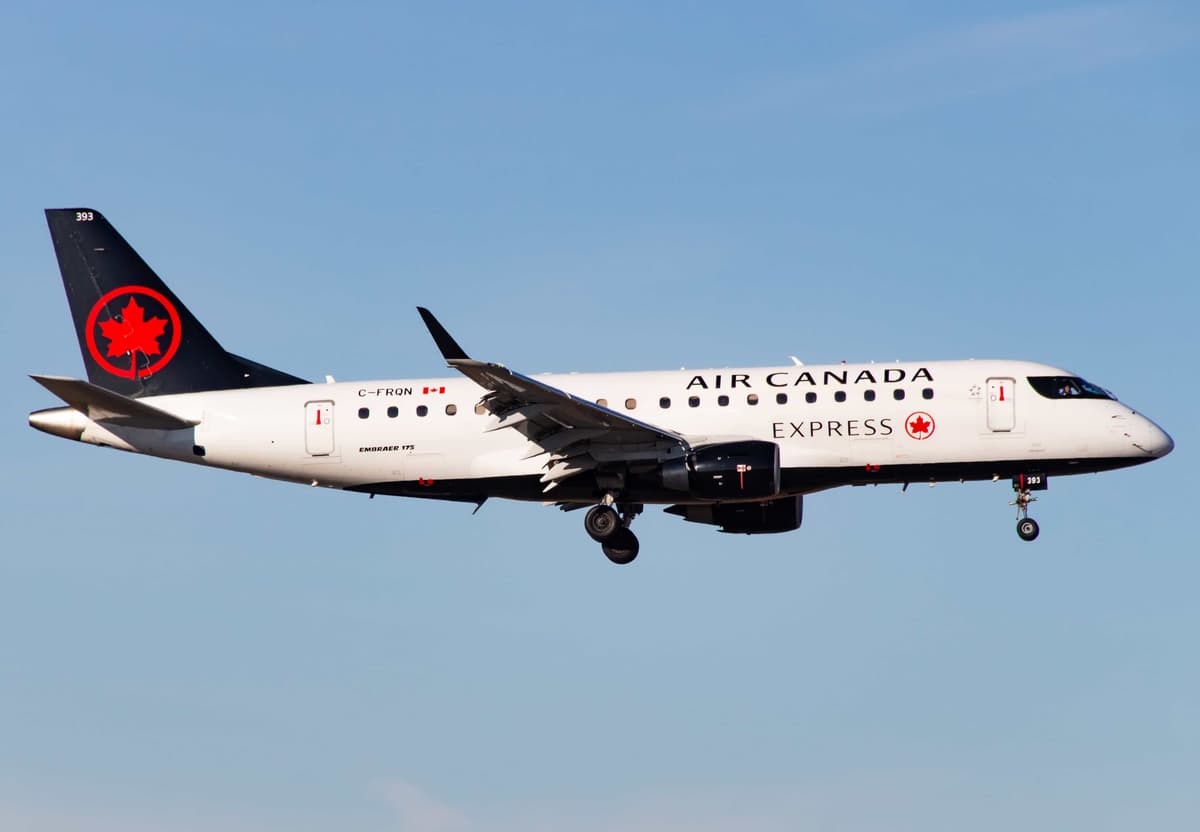
The Embraer E175, a member of the E-Jet family, is a narrow-body regional jet introduced in 2003. This aircraft was designed as part of Embraer's strategy to offer diverse solutions in the regional jet market, with a focus on balancing operational efficiency and passenger comfort for short to medium-haul routes.

The E175 extends 31.7 meters (103.9 feet) in length, slightly longer than its predecessor, the E170. This additional length allows for increased seating capacity, accommodating up to 88 passengers. The wingspan of 26.0 meters (85.3 feet) and a wing area of 72.7 square meters (782.8 square feet) contribute to the aircraft's optimized aerodynamic performance, particularly beneficial for operations in varied regional environments.

Equipped with two GE engines providing a combined thrust of 126.0 kN (28,400 lbf), the E175 has an enhanced range of approximately 4,074 kilometers (2,200 nautical miles). This range, coupled with the aircraft's efficient fuel consumption, positions the E175 as an attractive option for airlines to connect regional destinations effectively. The E175's interior is designed with an emphasis on passenger experience, featuring comfortable seating, larger windows, and modern in-flight entertainment systems. The layout is also tailored for quick boarding and disembarking, aligning with the operational needs of regional air travel.

In the regional aircraft market, the Embraer E175 competes with Bombardier's CRJ-900. This segment was previously occupied by the earlier BAe 146 and Fokker 70. The E175's introduction provided airlines with a versatile aircraft that combines the comfort and amenities of larger jets with the economics and flexibility of regional operations. Airlines operating the Embraer E175 include American Eagle, Delta Connection, and Republic Airways. These carriers have incorporated the E175 into their fleets to serve diverse regional routes, taking advantage of its operational efficiency, range, and passenger appeal. The aircraft's role in these fleets demonstrates its adaptability to various route structures and its capacity to offer a comfortable travel experience on regional journeys. As of 2023, the E175 is still in production, with strong demand from regional carriers in the US.

Share:
Values shown may not be 100% accurate, as some metrics are averages or only represent certain production years and configurations. Engine specs are based on the best options available.

Related Airliner Comparisons

Frequently Asked Questions

Learn more about the WebFlite Aircraft Comparison Tool.

What is this comparison tool?

WebFlite’s Aircraft Comparison Tool allows users to contrast the specifications of over 100 airliner, freighter, and fighter jet models. The head-to-head comparisons include data related to size, weight, capacity, performance, and much more! Whether you want to compare similar aircraft, old vs new, big vs small - you can find it here at WebFlite!

How do you use this tool?

The Aircraft Comparison Tool is extremely easy to use! First, select your type of aircraft - Airliners, Freighters, or Fighter Jets. When the page reloads, select an aircraft from each of the two drop-down menus below the aircraft illustrations, and then click the blue “Compare” button. The page will automatically update and display those two aircraft and their specs! You can start a new comparison by changing either one or both aircraft from the drop-downs, and clicking “Compare” again. You can also change the aircraft type at the top of the page.

Where does the aircraft data come from?

The data for these aircraft has been scraped from a few sources, including manufacturer websites, government databases, and Wikipedia. While the data is fairly accurate, we cannot guarantee it all to be 100% exact. This is mainly due to discrepancies between sub-models and configurations. Most aircraft in this comparison tool will include what variant its data is based off of.

What are the most popular aircraft comparisons?
Can I share this tool or a comparison?

Yes! Please feel free to share this tool or any specific aircraft comparison with friends, family, or on social media! You may also share on your own website, but please include a link to the tool! We appreciate any support with helping us grow!

webflite-logoWebFlite
2023 WebFlite. All rights reserved.