Airliner Comparison ToolCompare 60+ passenger aircraft models head to head!

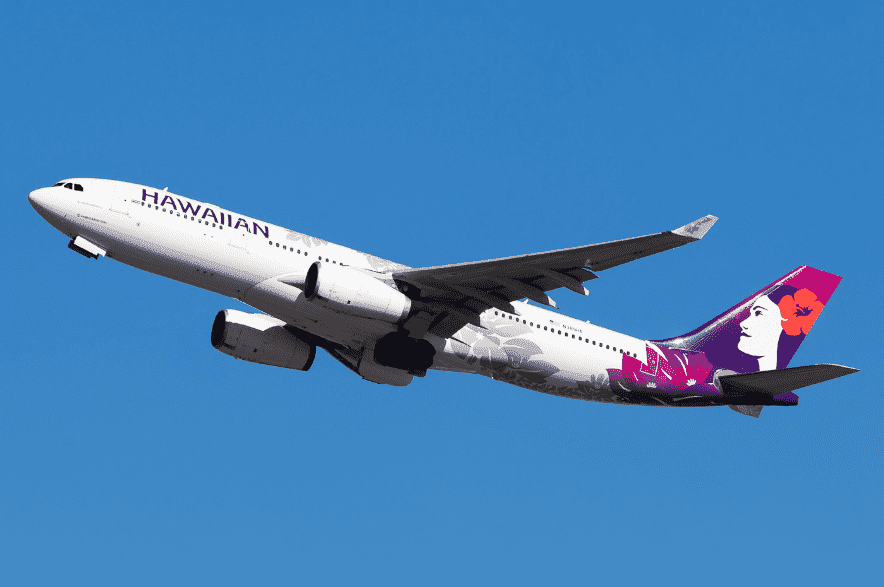
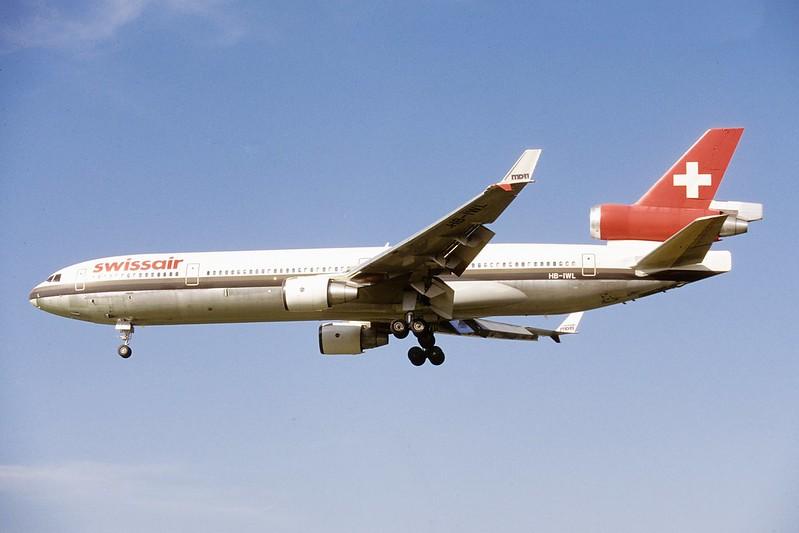
Airbus A330-200 vs. McDonnell Douglas MD-11

vs.
Compare

A330-200

vs.

MD-11

Price (USD)
$231 Million$75 Million
First Flight
19971990
Body Type
Wide-bodyWide-body
Length
58 m193 ft
61 m202 ft
Wingspan
60 m197 ft
52 m170 ft
Wing Area
361 m²3,892 ft²
338 m²3,647 ft²
Fuselage Width
5 m18 ft
6 m19 ft
Height
17 m57 ft
17.7m 57 ft
Max Takeoff Weight
251,000 kg553,360 lbs
273,294 kg602,510 lbs
Number of Engines
23
Engine Options
General Electric CF6 / Pratt & Whitney PW4000 / Rolls-Royce Trent 700General Electric CF6 / Pratt & Whitney 4000
Max Thrust Per Engine
316 kN71,100 lbf
274 kN61,500 lbf
Max Total Thrust
632 kN142,200 lbf
822 kN123,000 lbf
Fuel Capacity
139,100 l36,746 gal
146,173 l38,615 gal
Range
13,450 km7,262 nm
12,455 km6,725 nm
Cruise Speed
870 km/h541 mph
876 km/h544 mph
Typical Seating
273 pax298 pax
Max Seating
406 pax410 pax

What Are the Differences Between the Airbus A330-200 and McDonnell Douglas MD-11

Airbus A330-200 vs McDonnell Douglas MD-11 Size Comparison

  • At 61.60 meters, the McDonnell Douglas MD-11 is 2.80 meters longer than the Airbus A330-200.
  • With a wingspan of 60.30 meters, the Airbus A330-200 is 8.30 meters wider from wingtip to wingtip.
  • The Airbus A330-200 and McDonnell Douglas MD-11 have heights of 17.40 meters and 17.70 meters respectively - making the McDonnell Douglas MD-11 0.30 meters taller.

Airbus A330-200 vs McDonnell Douglas MD-11 Range

  • Airbus A330-200’s range of 13,450 kilometers is greater than McDonnell Douglas MD-11’s range of 12,455 kilometers. Therefore, the Airbus A330-200 can fly nonstop approximately 995 kilometers further.
  • The McDonnell Douglas MD-11 can hold 38,615 gallons of fuel, which is 1,869 gallons more than the Airbus A330-200’s tank capacity of 36,746 gallons.

Airbus A330-200 vs McDonnell Douglas MD-11 Seating

  • In a typical seating configuration, the McDonnell Douglas MD-11 can accommodate 298 passengers, which is about 25 passengers more than Airbus A330-200’s seating capacity.
  • The McDonnell Douglas MD-11’s max seating capacity is 410 passengers, compared to 406 passengers of the Airbus A330-200.

About the Airbus A330-200

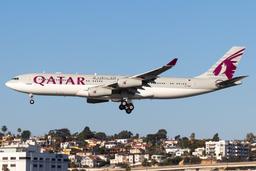
Introduced in 1998, the Airbus A330-200 is a wide-body, twin-engine jetliner for medium to long-haul flights. This model, with its shorter fuselage than the A330-300, offers enhanced range capabilities, making it a versatile option for international airlines.

Spanning 193 feet (58.8 meters) in length with a wingspan of 197.8 feet (60.3 meters), the A330-200 accommodates up to 247 passengers in a standard three-class configuration. Its design prioritizes cabin flexibility, allowing airlines to customize seating layouts to suit various route requirements. The aircraft's interior features modern amenities, contributing to passenger comfort and satisfaction. Powered by a choice of engines from Rolls-Royce, General Electric, or Pratt & Whitney, the A330-200 achieves a balance of power and efficiency. It boasts a maximum takeoff weight of about 533,500 lbs and can cover distances up to 7,250 nautical miles. This extended range is instrumental in connecting distant city pairs and expanding airlines' route networks. The A330-200 integrates Airbus's advanced avionics and fly-by-wire technology, features that enhance flight performance and safety. The two-person cockpit is equipped with an electronic flight instrument system and sophisticated navigation tools, making flight operations more efficient and intuitive.

Airlines like Delta Air Lines, Turkish Airlines, and Etihad Airways have utilized the A330-200 extensively. Its operational flexibility makes it suitable for a variety of routes, from dense, high-demand corridors to specialized long-haul flights. The aircraft's ability to efficiently operate on transcontinental routes has been particularly beneficial for airlines expanding their global presence. The A330-200's market introduction responded to the need for a wide-body aircraft with optimized range and capacity. The -200 competes with the Boeing 767-400ER, as well as with the Boeing 787-8. While production for A330 CEOs ceased in 2021, the model is now being built in the newer-800 and -900 variants.

About the McDonnell Douglas MD-11

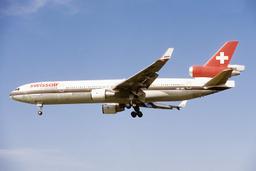
The McDonnell Douglas MD-11 is a wide-body, tri-jet airliner, recognized for its extended range and enhanced capabilities in long-haul commercial aviation. As a successor to the iconic DC-10, the MD-11 incorporated advanced technology and design improvements, making it a significant model in the evolution of wide-body aircraft. The MD-11 took its maiden flight in 1990, and was produced until the turn of the 21st century. There are no MD-11s servicing passenger flights today, but some MD-11 are still being used for freight operations with FedEx, UPS, and Western Global Airlines.

With a length of 61.6 meters (202.1 feet), the MD-11 is notably longer than the DC-10, which provided increased passenger and cargo capacity. This extension in length was complemented by a wingspan of 52.0 meters (170.5 feet), which included winglets for improved aerodynamic efficiency. The MD-11's was equipped with GE CF6-80C2s or PW4000 turbofan engines, which delivered a total maximum thrust of 822.0 kN (123,000 lbf). With a substantial fuel capacity of 146,173 liters (38,615 US gallons), the MD-11 boasts a range of approximately 12,455 kilometers (6,725 nautical miles), enabling it to operate on intercontinental routes with ease.

The MD-11 comfortably accommodated 298 passengers, and could be designed to fit over 340 in a higher density configuration. The most common configurations for the twin aisle jet included 9 seats to a row (3-3-3 or 3-4-2).

In the competitive landscape of long-haul airliners, the McDonnell Douglas MD-11 was positioned as an alternative to models like the Boeing 747 and the Lockheed L-1011 TriStar. By 2004, most carriers that utilized the MD-11 for long-haul passenger routes had replaced it with the Airbus A330, A340, and Boeing 777. When Boeing acquired McDonnell Douglas in 1997, it ultimately created internal competition for the MD-11 with the 767 and 777. A lack of interest from the market also lead to Boeing cutting production for the commercial variant short, while the freight version was continued for slightly longer.

KLM, Swissair, and Delta Air Lines were among the airlines who utilized the aircraft's range and capacity to expand their international route offerings. The MD-11's operational role was characterized by its ability to efficiently serve long-haul routes, offering a blend of passenger comfort and operational economics. Some airlines like China Eastern Airlines and Korean Air had converted their MD-11 aircraft into freighters rather than selling or retiring them.

The MD-11's production and service history reflect its role as a pivotal model in the wide-body aircraft segment. Its design and technological advancements, including the use of winglets and a glass cockpit, marked important steps in the advancement of commercial aircraft design. Although its production was eventually surpassed by more modern aircraft, the MD-11 remains a notable aircraft in the history of aviation, particularly for its contributions to long-haul air travel.

Share:
Values shown may not be 100% accurate, as some metrics are averages or only represent certain production years and configurations. Engine specs are based on the best options available.

Related Airliner Comparisons

Frequently Asked Questions

Learn more about the WebFlite Aircraft Comparison Tool.

What is this comparison tool?

WebFlite’s Aircraft Comparison Tool allows users to contrast the specifications of over 100 airliner, freighter, and fighter jet models. The head-to-head comparisons include data related to size, weight, capacity, performance, and much more! Whether you want to compare similar aircraft, old vs new, big vs small - you can find it here at WebFlite!

How do you use this tool?

The Aircraft Comparison Tool is extremely easy to use! First, select your type of aircraft - Airliners, Freighters, or Fighter Jets. When the page reloads, select an aircraft from each of the two drop-down menus below the aircraft illustrations, and then click the blue “Compare” button. The page will automatically update and display those two aircraft and their specs! You can start a new comparison by changing either one or both aircraft from the drop-downs, and clicking “Compare” again. You can also change the aircraft type at the top of the page.

Where does the aircraft data come from?

The data for these aircraft has been scraped from a few sources, including manufacturer websites, government databases, and Wikipedia. While the data is fairly accurate, we cannot guarantee it all to be 100% exact. This is mainly due to discrepancies between sub-models and configurations. Most aircraft in this comparison tool will include what variant its data is based off of.

What are the most popular aircraft comparisons?
Can I share this tool or a comparison?

Yes! Please feel free to share this tool or any specific aircraft comparison with friends, family, or on social media! You may also share on your own website, but please include a link to the tool! We appreciate any support with helping us grow!

webflite-logoWebFlite
2023 WebFlite. All rights reserved.