Freighter Jet Comparison ToolCompare 20+ cargo aircraft models head to head!

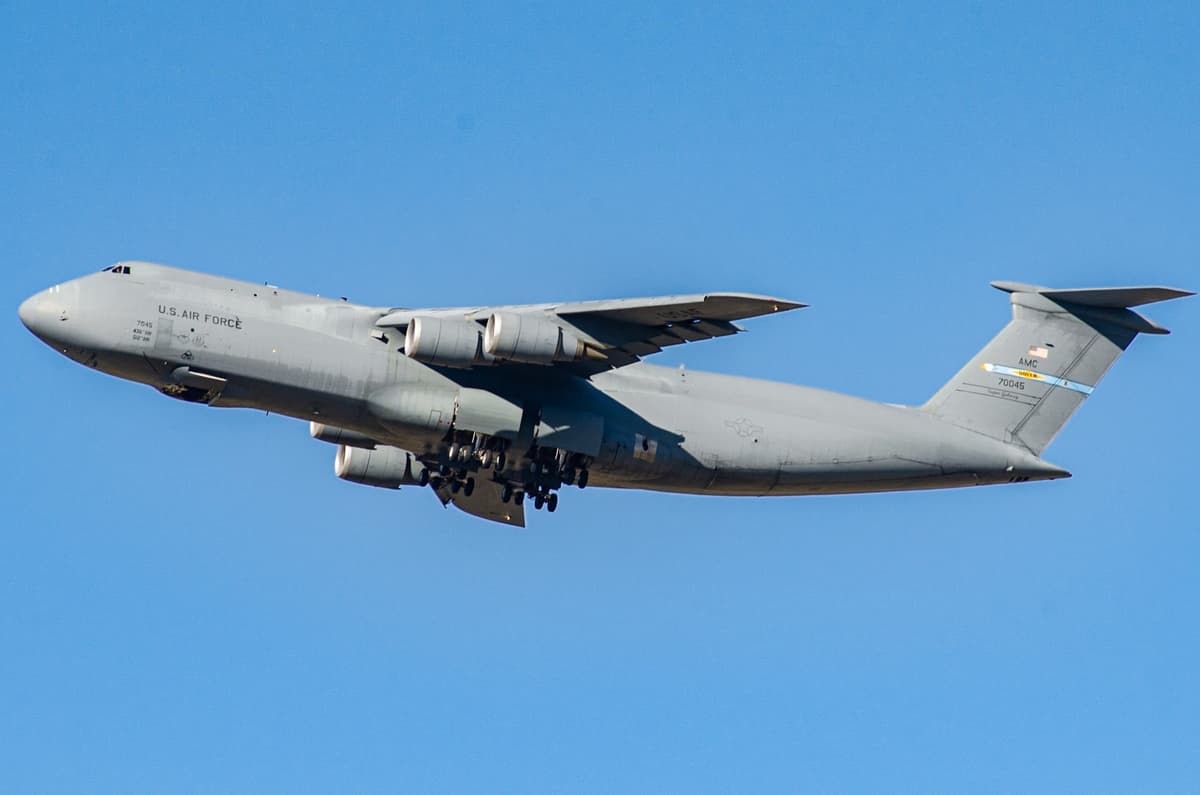
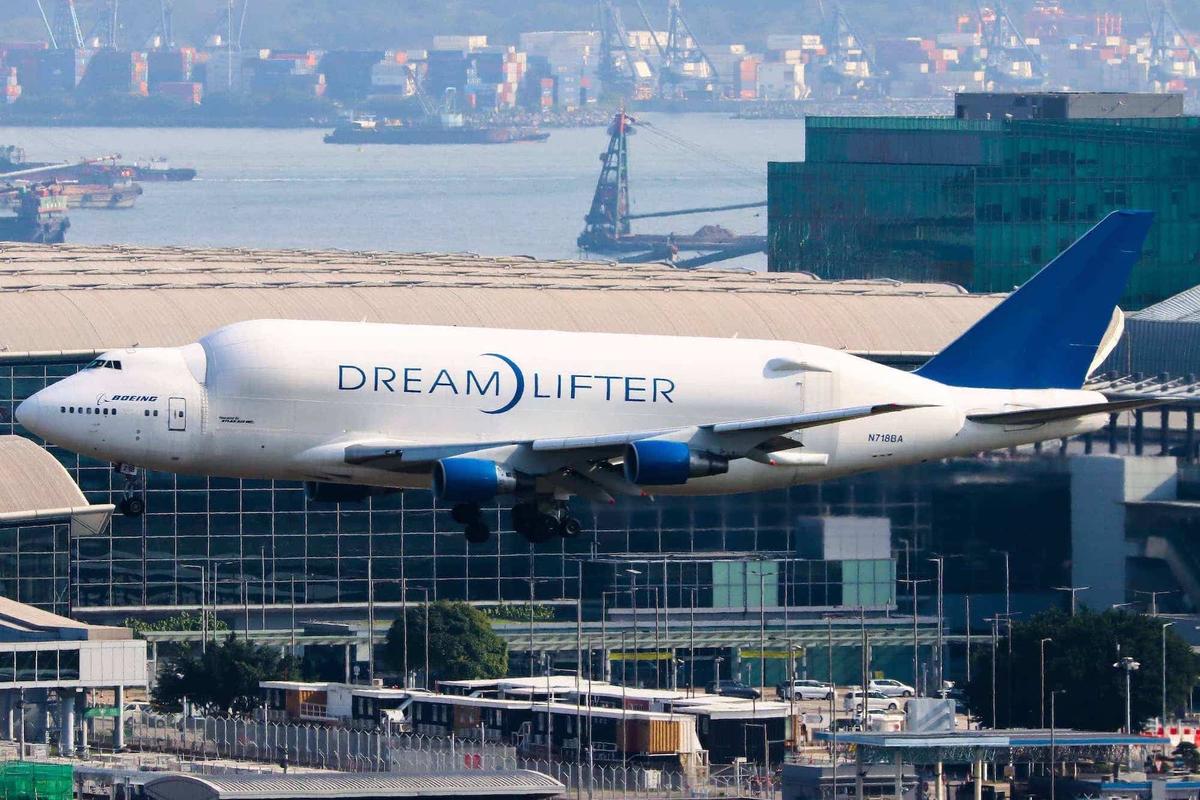
Lockheed C-5 Galaxy vs. Boeing Dreamlifter

vs.
Compare

C-5

vs.

Dreamlifter

First Flight
19682006
Length
75 m247 ft
71 m235 ft
Wingspan
67 m222 ft
64 m211 ft
Wing Area
580 m²6,243 ft²
541 m²5,825 ft²
Fuselage Width
5 m18 ft
8 m27 ft
Height
19 m65 ft
21 m70 ft
Cargo Capacity
127 t281,000 lbs
133 t250,000 lbs
Max Takeoff Weight
381 t840,000 lbs
364 t803,000 lbs
Number of Engines
44
Engine Manufacturer & Model
General Electric CF36 (F138)Pratt & Whitney PW4000
Max Thrust Per Engine
230 kN51,000 lbf
282 kN63,300 lbf
Max Total Thrust
920 kN204,000 lbf
1,128 kN253,200 lbf
Fuel Capacity
193,600 l51,149 gal
199,150 l52,616 gal
Range
4,260 km2,300 nm
7,800 km4,212 nm
Cruise Speed
830 km/h516 mph
878 km/h546 mph

What Are the Differences Between the Lockheed C-5 Galaxy and Boeing Dreamlifter

Lockheed C-5 Galaxy vs Boeing Dreamlifter Size Comparison

  • With a length of 75.30 meters, the Lockheed C-5 Galaxy is 3.60 meters longer than the Boeing Dreamlifter.
  • The Lockheed C-5 Galaxy and Boeing Dreamlifter have heights of 19.80 meters and 21.50 meters respectively - making the Boeing Dreamlifter 1.70 meters taller.

Lockheed C-5 Galaxy vs Boeing Dreamlifter Cargo Capacity

  • The Boeing Dreamlifter can carry about 133 tons of cargo, while the Lockheed C-5 Galaxy can hold about 127 tons . Head to head, the Boeing Dreamlifter has approximately 6 tons more of cargo capacity.

About the Lockheed C-5 Galaxy

The Lockheed C-5 Galaxy is a large military transport aircraft developed by the Lockheed Corporation, now Lockheed Martin. The C-5 distinguishes itself by its sheer size and payload capacity, designed to transport a wide range of military equipment, including oversized vehicles and machinery.

Production History: Development of the Lockheed C-5 Galaxy began in the 1960s to replace the Douglas C-133 Cargomaster and to complement the Lockheed C-141 Starlifters. The United States Army desired a transport aircraft that could carry a wide array of outsized equipment. After a rigorous selection process, Lockheed's design, characterized by a T-tail and a unique cockpit position above the cargo area, was chosen in 1965. The first C-5A Galaxy was rolled out in 1968. The program, however, faced several challenges, including technical problems, weight issues, and cost overruns, leading to congressional investigations. Despite these hurdles, the C-5 Galaxy emerged as a key asset in strategic airlift capabilities​​​​.

Design Features: The C-5 Galaxy stands out with its four General Electric TF39-GE-1C turbofan engines, providing a significant thrust and efficiency. Its design includes a high-set wing with a 25-degree sweep and a distinctive T-tail. The aircraft is equipped with forward and rear cargo loading assemblies and a visor-type upward-hinged nose. The upper deck can accommodate a crew of six, a relief crew, and passengers, with provisions like bunk rooms, galleys, and lavatories. The cargo compartment is vast, capable of carrying a range of military hardware, including tanks, helicopters, and large numbers of troops. The landing gear system is unique, featuring a "kneeling" capability to facilitate cargo loading. The C-5 also has inflight refueling capabilities, extending its operational range significantly​​.

Operational History: Since its introduction, the C-5 Galaxy has been a critical component of U.S. military logistics, capable of transporting heavy and outsized military equipment globally. It played a vital role in operations such as Desert Shield and Desert Storm, where despite being only 12% of the airlift fleet, it carried 44% of the cargo. The Galaxy's capacity for strategic airlift has proven invaluable in numerous military and humanitarian operations, making it a cornerstone of the U.S. Air Force's airlift capability.

Similar Freighter Models: The Lockheed C-5 Galaxy is often mentioned alongside the Russian Antonov An-124. The C-5 was the largest aircraft in the world until the introduction of the An-124 in 1982. Compared to other US military aircraft, the C-5 Galaxy is significantly bigger than the C-17 Globemaster III, C-130 Hercules, and C-141 Starlifter.

About the Boeing Dreamlifter

The Boeing 747-400 Large Cargo Freighter (LCF), commonly known as the Dreamlifter, is a specially modified version of the Boeing 747-400. It is a wide-body cargo aircraft renowned for its outsized cargo-carrying capacity, primarily used for transporting Boeing 787 Dreamliner parts.

Production History: The Dreamlifter was developed as a solution to logistical challenges faced by Boeing in transporting large aircraft components. Launched in December 2006, it was designed to facilitate the transportation of parts from global suppliers to Boeing's assembly facilities in the United States. The Dreamlifter is a result of extensive modifications to existing Boeing 747-400 airframes. By June 2008, three of the four planned Dreamlifters were operational, with the fourth becoming operational in February 2010. The aircraft was named Dreamlifter as a nod to the 787's name, Dreamliner.

Design Features: The Dreamlifter is distinguished by its enlarged fuselage, which provides a cargo volume of 65,000 cubic feet, three times that of a 747-400F freighter. The aircraft is powered by four Pratt & Whitney PW 4062 turbofans, ensuring efficient performance. It has a length of 235 ft 2 in, a wingspan of 211 ft 5 in, and a height of 70 ft 8 in. Its maximum takeoff weight is 364,235 kg (803,001 lb), and it has a cruising speed of Mach 0.82. The Dreamlifter's range is approximately 4,200 nautical miles when fully loaded.

Operational History: The Dreamlifter has been instrumental in the production of the Boeing 787 Dreamliner, enabling the efficient global transportation of large aircraft parts. This aircraft has also been involved in humanitarian efforts, such as transporting medical supplies during global crises, demonstrating its utility beyond industrial logistics.

Similar Freighter Models: While the Dreamlifter is unique in its specific role for Boeing's production logistics, similar large cargo aircraft include the Airbus Beluga and BelugaXL, which serve a similar function for Airbus. These aircraft are also modified from existing airframes (A300-600 and A330 respectively) and are designed to transport oversized aircraft components. The comparison highlights the niche but critical role these specialized freighters play in modern aircraft manufacturing logistics.

Share:
Values shown may not be 100% accurate, as some metrics are averages or only represent certain production years and configurations. Engine specs are based on the best options available.

Related Freighter Comparisons

Frequently Asked Questions

Learn more about the WebFlite Aircraft Comparison Tool.

What is this comparison tool?

WebFlite’s Aircraft Comparison Tool allows users to contrast the specifications of over 100 airliner, freighter, and fighter jet models. The head-to-head comparisons include data related to size, weight, capacity, performance, and much more! Whether you want to compare similar aircraft, old vs new, big vs small - you can find it here at WebFlite!

How do you use this tool?

The Aircraft Comparison Tool is extremely easy to use! First, select your type of aircraft - Airliners, Freighters, or Fighter Jets. When the page reloads, select an aircraft from each of the two drop-down menus below the aircraft illustrations, and then click the blue “Compare” button. The page will automatically update and display those two aircraft and their specs! You can start a new comparison by changing either one or both aircraft from the drop-downs, and clicking “Compare” again. You can also change the aircraft type at the top of the page.

Where does the aircraft data come from?

The data for these aircraft has been scraped from a few sources, including manufacturer websites, government databases, and Wikipedia. While the data is fairly accurate, we cannot guarantee it all to be 100% exact. This is mainly due to discrepancies between sub-models and configurations. Most aircraft in this comparison tool will include what variant its data is based off of.

What are the most popular aircraft comparisons?
Can I share this tool or a comparison?

Yes! Please feel free to share this tool or any specific aircraft comparison with friends, family, or on social media! You may also share on your own website, but please include a link to the tool! We appreciate any support with helping us grow!

webflite-logoWebFlite
2023 WebFlite. All rights reserved.